
Getting UTC and EST right isn’t something most people think about until they’ve already missed a meeting or showed up an hour early to a call nobody else was on. Honestly, that’s a pretty common experience these days, especially for remote teams, developers dealing with server logs, and anyone trying to coordinate with people across different continents. Here’s the thing though — it’s actually way simpler than most folks make it out to be once you get the two basic rules straight.
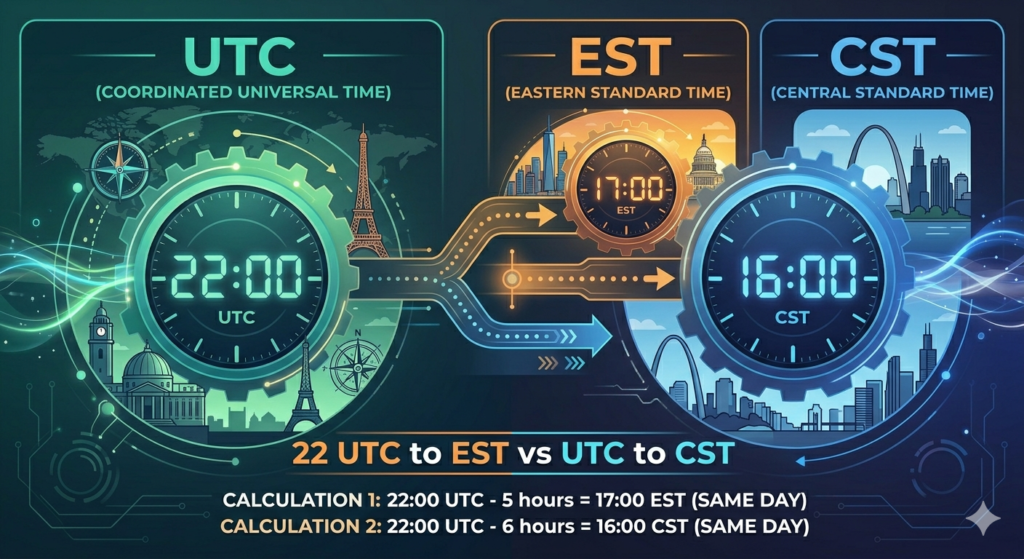
You subtract 5 hours from UTC to EST in the winter months. When daylight saving time kicks in, you only subtract 4 hours. Sounds straightforward, right? Yet so many people still get tripped up by that switch or the overnight rollover where early UTC times land on the previous day. Ever tried scheduling a call across time zones and gotten it completely wrong? You’re definitely not alone.
UTC time to EST matters more than ever now because UTC is the global standard for pretty much everything important. In this guide, I’ve put together everything you need — the simple math, handy tables, real examples, and all the tricky bits that usually confuse people. By the time you finish reading, you’ll be converting times confidently without second-guessing yourself.
Why UTC to EST Conversion Matters
UTC to EST conversions have become super important in our connected world. UTC works as the main reference time that aviation, banks, servers, and scientists all rely on. Eastern Time, meanwhile, covers the busiest business areas in the US and affects a huge number of people every single day.
If you get the conversion wrong, it can cause missed meetings, messed up schedules, or even costly mistakes in work. These days, remote and hybrid work makes up 22 to 27 percent of all US workdays. And get this — over 28 percent of companies now run teams spread across four or more time zones. That means accurate timing isn’t optional anymore.
A solid UTC to EST converter can save you so much frustration. Whether you’re a developer checking logs at odd hours, a student jumping into online classes, a gamer syncing up with friends worldwide, or a business person handling calls, knowing this stuff just makes life easier.
I’ve seen way too many people lose precious time because of one wrong hour. The reality is that mastering UTC time to EST cuts down on those annoying “wait, what time is it there?” moments that kill productivity and cause stress.
Once you understand why this conversion matters and how it affects real daily situations, you’ll start catching problems before they happen. It really does bring a lot more smoothness to your schedule.
The Core Math Behind UTC to Eastern Time
Converting utc to est is basically just simple subtraction, but you have to know which number to use depending on the time of year. In winter when EST is active, you subtract 5 hours from the UTC time. That’s the main rule most people start with and it works really well.
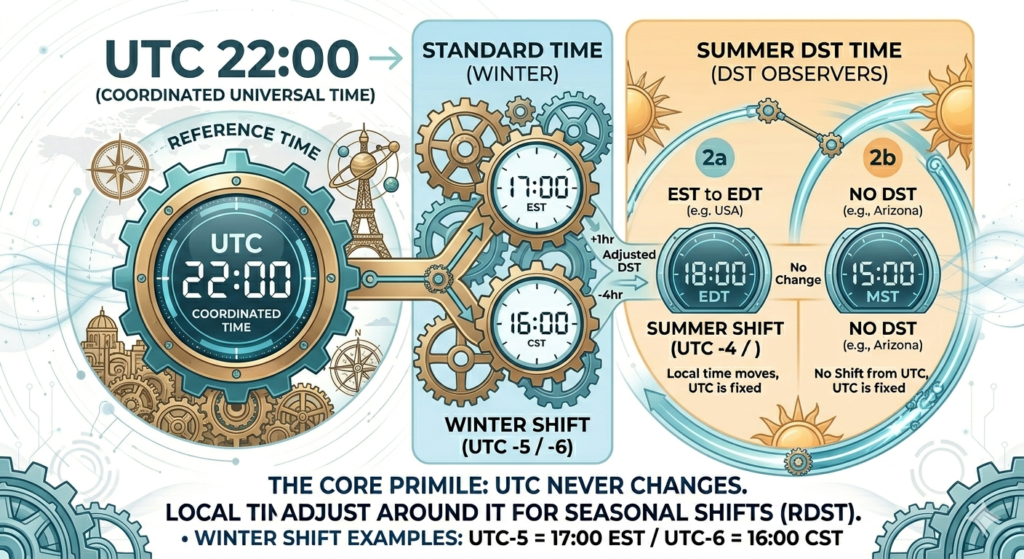
When summer rolls around and daylight saving time is active, you only subtract 4 hours because EDT takes over. The trick is remembering when that switch happens so you don’t end up off by exactly one hour.
For example, 18 UTC to est turns into 1 PM Eastern in winter or 2 PM in summer. 14 UTC to est becomes 9 AM EST or 10 AM EDT. These times come up all the time in logs and meeting invites, so getting them right feels good.
The midnight rollover is the part that catches most new people off guard. Any UTC time from 0000 to 0400 actually falls on the previous day in Eastern Time. Once you hit 0500 UTC, the date usually stays the same as the UTC date.
Honestly, a good utc to est time converter takes away all that mental effort. It checks the current daylight saving status automatically and gives you the correct answer every single time without any hassle.
EST vs EDT | The Confusion Nobody Explains Well
EST is the regular winter time and stays 5 hours behind UTC. EDT is what we use in summer during daylight saving and it’s only 4 hours behind. Eastern Time actually covers both, depending on the season.
In 2026, daylight saving time starts on March 8 and ends on November 1. A lot of people just say EST all year round even though it’s only technically correct in winter. This one little detail causes more confusion than anything else.
Utc vs est and the difference between utc and est questions pop up constantly when the clocks change. That single hour shift might not sound like much, but it can throw off your entire day if you’re not careful.
Utc to et or utc to eastern usually means whatever offset is currently active. Once you get used to checking the season, the whole thing becomes second nature pretty quickly.
The reality is this seasonal flip trips up even experienced users sometimes. But after you lock in the dates and make it a habit to check, you’ll wonder why it ever felt complicated.
Complete Conversion Table Every UTC Hour
A clear UTC to EST chart is honestly one of the most useful things you can have. Here’s a simple table that shows the most searched times with both winter and summer results so you can see everything at a glance:
| UTC Time | Winter (EST) | Summer (EDT) |
|---|---|---|
| 0000 UTC | 7 PM previous day | 8 PM previous day |
| 1400 UTC | 9 AM | 10 AM |
| 1700 UTC | 12 PM | 1 PM |
| 2000 UTC | 3 PM | 4 PM |
| 2300 UTC | 6 PM | 7 PM |
This table covers the times people look up most often, including military formats like 1400 utc to est and 1700 utc to est. Remember that early hours always roll over to the previous day.
You can scan this quickly instead of doing the math in your head every time. It works great on phones when you’re in a hurry.
Having the full picture with both EST and EDT makes planning so much less stressful for everyone involved.
Military Time UTC Conversions People Actually Search
Military time feels more precise and professional when you’re doing utc to est conversions. 1400 utc to est turns into 9 AM EST in winter or 10 AM EDT in summer. Super common for work stuff.
1700 utc to est becomes 12 PM noon EST or 1 PM EDT. This one shows up all the time for meetings between the US and Europe.
Other popular ones include 0800 utc to est (3 AM or 4 AM), 2000 utc to est (3 PM or 4 PM), and 2300 utc to est (6 PM or 7 PM). The basic subtraction rule stays exactly the same.
Always make sure you’re using the right seasonal offset. That one habit alone stops most of the classic one-hour mistakes.
Once you get comfortable with military time, logging and scheduling starts to feel way cleaner and more reliable.
AM and PM UTC Times Converted to Eastern
Midnight UTC to est lands at 7 PM the previous day EST or 8 PM previous day EDT. 9am utc to est converts to 4 AM EST in winter or 5 AM EDT in summer.
2pm utc to est becomes 9 AM EST or 10 AM EDT. These kinds of times work really well for coordinating with remote teams.
5pm utc to est equals 12 PM EST or 1 PM EDT, and 10pm utc to est reaches 5 PM EST or 6 PM EDT. Most people prefer thinking in AM and PM for their daily plans.
Seeing both versions side by side helps you pick the right one fast based on the current season.
This format just feels more natural for regular scheduling and takes a lot of the guesswork out of your day.
UTC Plus 8 and Other Offset Zones to EST
UTC+8 to EST means you subtract 13 hours in winter or 12 hours in summer. For example, 11 utc+8 to est becomes 10 PM previous day EST or 11 PM previous day EDT.
UTC+2 to EST, UTC+1 to EST, and UTC-5 to EST all work on the same idea — you calculate the total difference after the base Eastern offset.
These conversions come in handy when you’re working with teams in Asia or Europe. Getting the direction right is really important.
Understanding these extra offsets opens up much better coordination across more regions.
A decent utc to est converter that handles different zones can save you tons of time and headaches.
UTC to EST for Developers and Timestamps
Developers work with utc timestamp to est all the time in logs and databases. The smartest move is storing everything in UTC and only converting when showing the time to users.
Never hardcode a fixed 5-hour difference because it breaks when daylight saving changes. Proper timezone libraries that adjust automatically are the way to go.
This approach keeps everything accurate and prevents annoying bugs throughout the year.
Good handling of utc to est in code makes debugging and user experience much better overall.
The US-Europe Scheduling Sweet Spot
1300 to 1500 UTC is usually the golden window for US East Coast and Europe teams. 1300 UTC equals 8 AM EST or 9 AM EDT.
This timing lines up nicely with afternoon in Europe, making it perfect for standups and important calls.
Utc to eastern planning gets a lot easier once you know these overlap hours.
Teams that use this window regularly report way fewer scheduling problems and smoother collaboration.
Common Mistakes When Converting UTC to Eastern Time
The biggest mistake people make is forgetting to switch between EST and EDT. A lot of folks subtract 5 hours all year and then wonder why they’re off by one hour in summer.
Mixing up the direction with offsets like UTC+8 to EST happens more often than you’d think. Always double-check the current daylight saving status.
Using basic converters that ignore DST creates the same problems over and over again.
How to Pick a Reliable UTC to EST Converter
Look for a utc to est converter that automatically handles daylight saving and clearly shows both EST and EDT. It should also support military time and other offsets.
The UTC to EST Converter is simple and fast. utctime.net has nice charts, and World Time Server gives good extra context.
EST to UTC | Reversing the Conversion
EST to UTC is just the opposite — you add 5 hours in winter or 4 hours in summer. 9 AM EST becomes 14:00 UTC in winter months.
Convert EST to UTC is handy when you need to send times to global systems or overseas colleagues.
Quick Reference | UTC to EST Chart
Use the tables earlier in this guide as your go-to utc to est chart. They clearly mark previous day times and show both seasons.
Summary
Getting utc time to est right really comes down to just two rules. Subtract 5 hours in winter for EST and 4 hours in summer for EDT. The hardest part is remembering which one is active right now.
You’ve now got tables, examples, and practical tips to handle pretty much anything that comes up. Bookmark the UTC to EST and you’ll never have to guess again.
Ready to make this easy? Use the free UTC to EST Converter at UTC to EST and get the right answer instantly.
FAQ’s
What is utc time to est and how is the conversion done?
Utc time to est is pretty simple — you subtract 5 hours during winter when EST is active, or subtract 4 hours in summer when EDT is running. For example, 17:00 UTC becomes 12 PM EST in winter or 1 PM EDT in summer. Always check if daylight saving time is on first. Times between midnight and 4 AM UTC roll over to the previous day in Eastern Time. Once you get the seasonal switch down, it becomes really easy and you won’t stress about it anymore.
What is the difference between EST and EDT when converting from UTC?
EST is the winter standard and sits 5 hours behind UTC. EDT is the summer daylight saving version and only sits 4 hours behind. In 2026 it runs from March 8 to November 1. A lot of people say EST all year even though it’s only correct in winter. That one-hour change causes most of the mix-ups in utc to eastern time conversions. Just make it a habit to check the current season and you’ll avoid the confusion.
What is 1400 UTC in eastern time?
1400 UTC turns into 9 AM EST during winter or 10 AM EDT in summer. This time slot works great for meetings between the US East Coast and Europe. You just subtract the right number of hours based on whether daylight saving is active. Many remote teams use this window regularly because it fits both sides nicely. It’s one of the most common military time searches for a good reason.
What is 1700 UTC to EST?
1700 UTC converts to 12 PM noon EST in winter or 1 PM EDT during summer. This is a really popular slot for cross-Atlantic calls and team meetings. Just subtract 5 or 4 hours depending on the season. Business folks and developers like it because it usually works well for everyone involved. Always confirm the current daylight saving status to be sure.
How do I convert UTC plus 8 to EST?
For utc+8 to est, you subtract 13 hours in winter or 12 hours in summer. So 11:00 UTC+8 would become 10 PM previous day EST or 11 PM previous day EDT. You start with the normal utc to est rule and then adjust for the extra 8 hours. This comes up a lot when working with Asia. Double-check the direction and season so you don’t get it backwards.
How is est to utc different from utc to est?
Est to utc is the reverse — you add hours instead of subtracting. Add 5 hours in winter or 4 hours in summer. So 9 AM EST becomes 14:00 UTC in winter. The direction makes all the difference, so always be clear which way you’re going. This is useful when sending times to international teams or global systems. A good converter handles both directions without any hassle at all.
For more : UTC to EST